The Past is Her Punishment
Yesteryear takes down the tradwife.
by Cole Stapleton
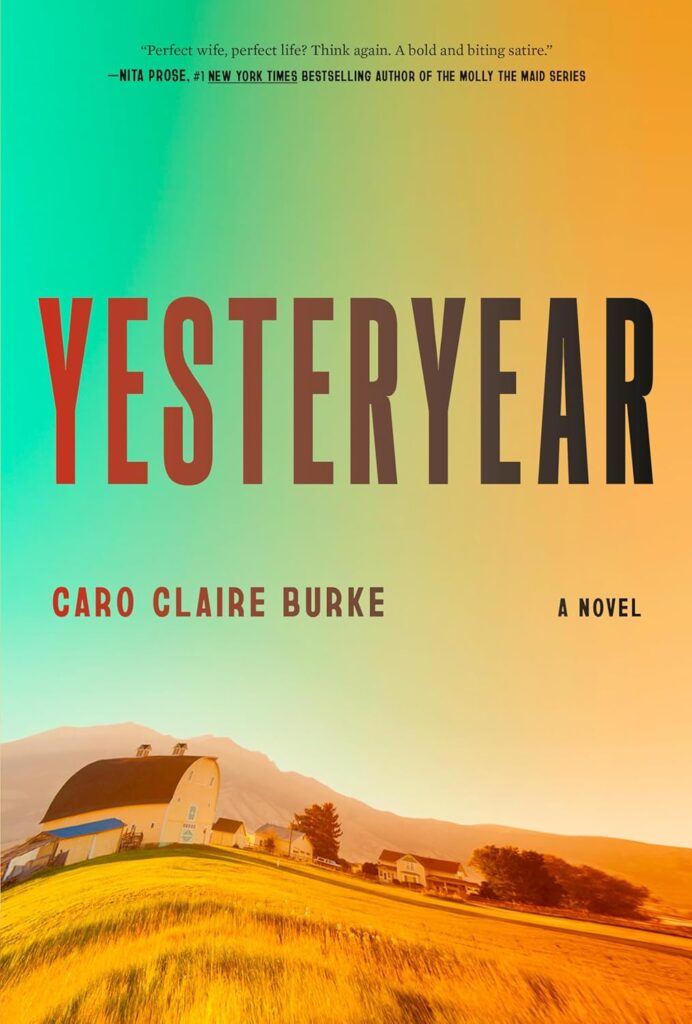
Yesteryear by Cairo Claire Burke is “the most buzzed-about novel of 2026”. Fifteen publishers competed in a major 2024 bidding war which was quickly followed by a star-studded scramble for the film rights, with MGM winning out and Anne Hathaway set to produce and star.
The writer and podcast host has written a decidedly timely work of fiction: Natalie, an internet-famous “traditional lifestyle” influencer falls back in time to 1805. The book jumps between timelines, tracking Natalie’s rise to online stardom intercut with the brutalities of 19th century life. This frenzied response from publishers and production companies tells us a lot about where the powers-that-be are betting our tastes lie. In the case of Yesteryear, the deluge of hype suggests that readers are eager to spend time with one of America’s most hated varieties of women: the tradwife.
I should note at the outset that I am a fan and loyal listener to Diabolical Lies, Caro Claire Burke’s podcast with co-host Katie Gatti Tassin. It’s the only podcast that I am a paid subscriber to, and one of the most astute and well-researched cultural commentary podcasts around. The hosts are both ex-conservative white women turned leftists who cover everything from the killing of Charlie Kirk to The Tragedy of Heterosexuality with journalistic integrity, nuance, and a commitment to critical analysis. Notably, the show is not monetized through ads; it is independently produced and subscriber-funded, and the hosts donate 33% of the show’s earnings to mutual aid funds chosen by its listeners.
Having this familiarity with Burke’s background and work, I came to Yesteryear with my own excitement beyond just industry buzz. In many ways, the book delivers on its promises. Natalie’s trajectory from isolated Harvard undergrad to the wife of an heir to an American political dynasty is well-traced. Her desire to differentiate herself from her bible-belt beginnings followed by the cruel realities of life inside the ivory tower, feel relatable. Natalie’s key characteristic is her competence: “All of it appeared to me as a series of tasks to be accomplished in the correct chronological order. I know it’s not that easy for other people, but it really is for me”. We see how this ruthless competence propels Natalie to engineer a perfect life for herself, manipulating her husband, his family, and her vast internet audience to bend reality to her will. It is as satisfying as it is grotesque to watch Natalie break this glass ceiling, only to take great care in resealing it behind her.
Reading Yesteryear, I expected a level of nuance comparable to the topics covered on Diabolical Lies. In fact, the first episode of the show, and the one that got me hooked (aptly titled “AgriCulture Wars”) discusses at length the tradwife account Ballerina Farm:
[Gatti Tassin:] “When you do cozy up to that power and fulfill its obligations for your life, which are… typically described in these spaces as God-given and natural and innate… [it is] your duty to be sublimated.
If there is anything that I’ve learned in my deep dives on white supremacy, it’s that women are very much at the forefront of that movement. They are very much the key agents of persuasion that are out in those streets… knocking on metaphorical doors and convincing people that their lives would be easier if you accept and submit.
[Burke:] “A hundred percent… People are very tired of prioritizing the pains of privileged white women. And so when you talk about this, you have people who… very fairly are like, ‘can we stop talking about the white women?’ Many women have this much worse off. People of color, women of color are not afforded the same sympathy, the same empathy, the same attention. And that is true. And simultaneously, we’re at this time period where we’re starting for the first time to actually discuss the absolute stranglehold that the patriarchy has on a big enough chunk of women to impact voter turnout…. unfortunately, it sounds like [we] need to talk about the white women.”
Yesteryear, however, offers no deeper analysis of tradwife culture than what can be gleaned from an episode of Diabolical Lies. The chapters handling the book’s main conceit, Natalie’s time travel to the 1800s, are where the writing is least considered. It’s also in these sections that we find Yesteryear’s most glaring personality trait: its contempt for Natalie.
In preparing for this review, two other Gryllus contributors read Yesteryear, and all three of us commented on the novel’s persistent tone of condescension. While some of this can be chalked up to a narrative voice that’s dripping in self-loathing, more often than not it reads as barely-disguised malice that Burke feels toward her protagonist. The secondary characters in the book, Natalie’s college roommate, her children, and a content producer who comes to live on Yesteryear Ranch, are each given a far more complex set of motivations than Natalie herself. Each of the book’s main plot points–in fact, the only way the narrative moves forward–is mediated through Natalie’s humiliation.
Natalie is ridiculed, excluded, exploited and literally punched from scene to scene. She suffers the most public forms of shame and degradation imaginable, and the book delights in this abasement. The real appeal Yesteryear makes to its readers is that Natalie deserves her suffering, in both the past and present timelines, because she chose it. Why should we feel bad about the physical abuse that Natalie suffers in 1805, when she has spent her life constructing an online persona glorifying that past? Why should we care that every one of her relationships ends in betrayal? She doesn’t deserve our sympathy, and she certainly won’t be getting any from Burke. In Burke’s efforts to avoid victimizing Natalie, she ends up giving her more power and agency than she realistically possesses, and that is the book’s primary failure. If Natalie is complicit in upholding a historical fantasy built on violence, then the only moral position to take as a reader is to relish in her punishment.
Yesteryear’s primary aim is to indulge our hunger to punish the contemporary conservative white woman.
Yesteryear belongs to a literary tradition of “time slip” novels (à la Sea of Tranquility or A Connecticut Yankee in King Arthur’s Court), with the defining 20th century example being Kindred by Octavia Butler. I couldn’t stop thinking about Kindred as I read Yesteryear, both for its structural similarities and also for its stark differences. Kindred follows its protagonist, Dana, a Black writer living in 1970’s California, as she falls back in time to 1815 Maryland and meets her ancestors. While its construction is more complex from the jump, Kindred is useful to compare to Yesteryear for the way the novel is interested in the systems that have created its characters. Butler doesn’t provide any easy answers for the question of what to “do” or “think” about the legacy of slavery. Rather, every relationship and plot point in Kindred serves to complicate and deepen our understanding of this shared history.
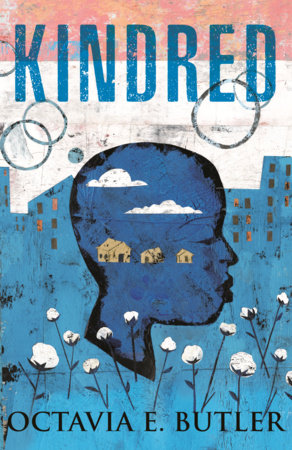
This systemic lens is where Kindred and Yesteryear part ways, and where Yesteryear ultimately disappoints. Yesteryear is a book about individual problems and individual consequences. Burke is not interested in peeling back the layers of a world that created a character like Natalie, or the environment that celebrated her before laughing at her disgrace. Neither is it interested in the past. Amidst its other flaws (without any spoilers, criticism of Memento comes to mind: “plot holes so big you could drive a truck through them”), Yesteryear’s primary aim is to indulge our hunger to punish the contemporary conservative white woman.
After all, we have these women to thank for such tragedies as: Ballerina Farm, a second Trump presidency, the backsliding of decades of feminist efforts towards gender equality. Why should we care about the cultural systems that created them? If they end up hurt by the very same men that they protect and promote? Good. If we’re stuck with the Kristi Noems of the world, at least we can watch them suffer fictitiously. Yesteryear is not a meaningful exploration of the historical vectors of gender and race. It is an instructional tale warning white women to repent for their sins, lest they end up trapped in a cage of their own construction.